
Props API vs The Odds API for player props: coverage, depth, and cost compared
If you've hit The Odds API's player-prop limits, you already know why this comparison exists.
For player props specifically, The Odds API and a props-first API differ in three ways that matter: The Odds API gates props to its Business plan, serves them one event at a time, and covers a narrower set of prop markets, while a props-first feed puts props on a single filterable endpoint from the free tier up. For game markets The Odds API is excellent. For props, the access model is the thing you'll feel first.
This is a narrow, honest comparison. The Odds API is a good product and the category default, so I'll say plainly where it wins before getting to props. I use propzapi as the props-first example because it's what I build, but the structural points apply to any props-first feed.
Where The Odds API is the right call
When props aren't your main event. The Odds API is the mature default, with clean documentation, broad game-market coverage across many sports and regions, and a cheaper entry tier than most. If you mostly need moneyline, spreads and totals, or you want international game markets, it's a strong pick and this article isn't arguing otherwise.
Credit where it's due. The Odds API has been around long enough that its docs are genuinely good, the JSON shape is well understood, and half the tutorials on the internet already use it. For a game-odds project it's a safe, boring, correct choice, and boring is a compliment for infrastructure.
It also wins on breadth outside the US. Its region system (us, uk, eu, au) pulls game markets from books that a US-focused props feed simply doesn't carry. If your product is international soccer moneylines, the comparison below doesn't apply to you.
The rest of this piece is about the one axis where an odds-first design shows its seams: player props.
How does each one expose player props?
The Odds API serves props one event at a time; a props-first API serves the whole slate in one call. With The Odds API you list events, then loop and hit /events/{eventId}/odds once per game. There's no single call that returns every prop on the slate. A props-first feed like propzapi returns the slate from one /v1/props request you filter by league and market.
This is the difference you notice on day one, before pricing ever comes up. Here's the loop The Odds API requires for a night of NBA points props.
# The Odds API: props are one event at a time, so a slate is a loop.
import requests
KEY = "YOUR_ODDS_API_KEY"

events = requests.get(
    "https://api.the-odds-api.com/v4/sports/basketball_nba/events",
    params={"apiKey": KEY},
).json()

props = []
for ev in events:                                  # one call PER game
    r = requests.get(
        f"https://api.the-odds-api.com/v4/sports/basketball_nba/events/{ev['id']}/odds",
        params={"apiKey": KEY, "regions": "us", "markets": "player_points"},
    )
    # each call bills markets x regions credits, and you're on the Business plan
    props.append(r.json())
And here's the same slate from a props-first endpoint.
# propzapi: props are first-class, so the slate is one call.
import requests

r = requests.get(
    "https://api.propzapi.com/v1/props",
    params={"league": "NBA", "market": "player_points"},
    headers={"X-API-Key": "YOUR_PROPZAPI_KEY"},
)
props = r.json()["data"]
print("credits:", r.headers["X-Credits-Cost"])   # exact cost, in the response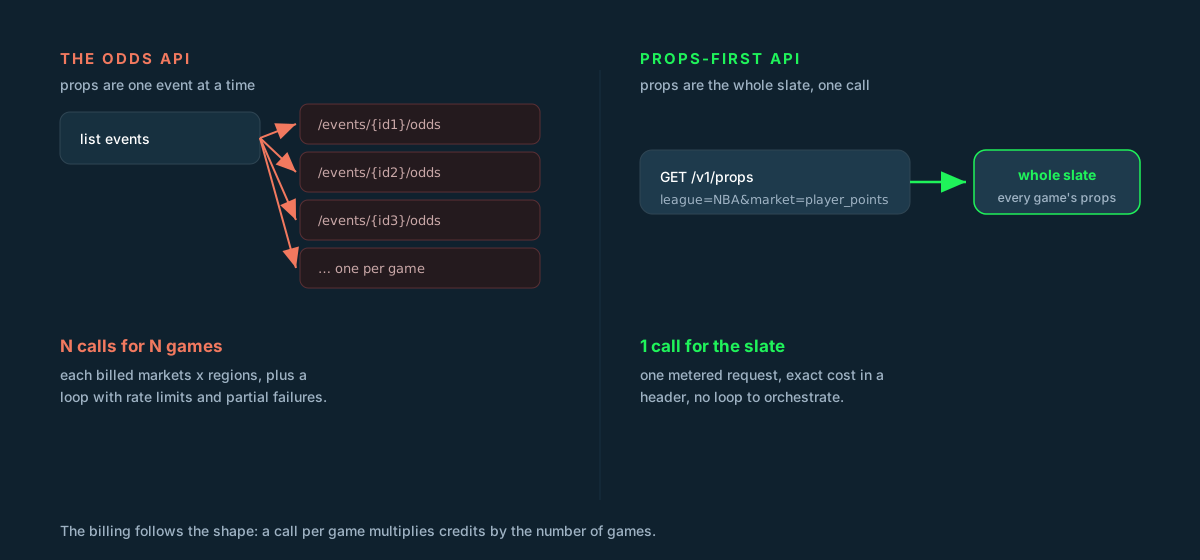
The per-event model isn't a bug, it's a consequence of props being bolted onto an odds-first API. But it means your prop code is a loop with rate-limit handling and partial-failure logic, where a props-first feed is a single request.
How does player prop coverage compare?
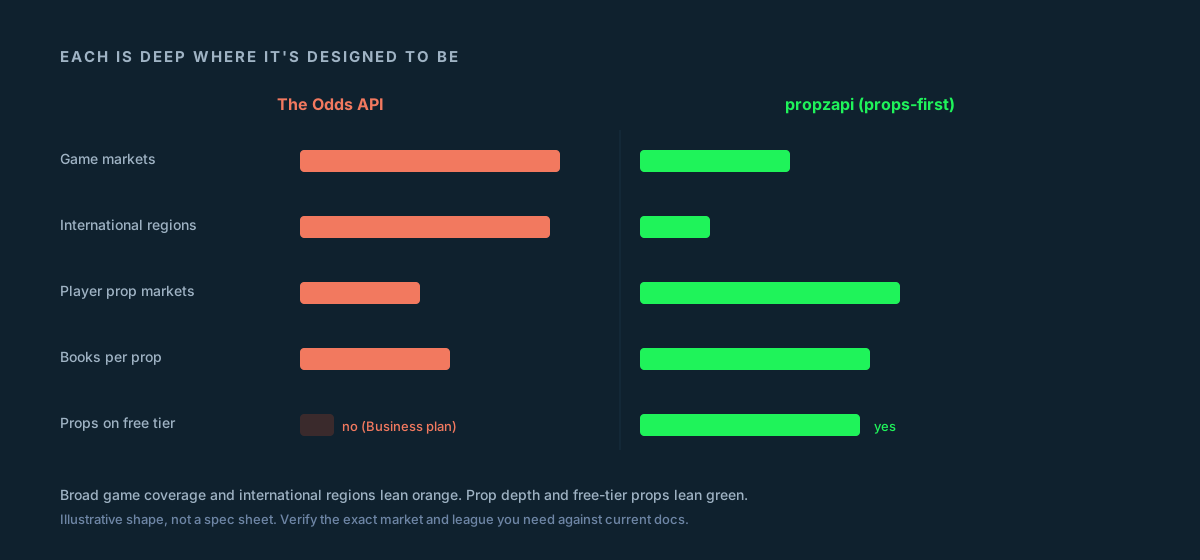
Both cover the core US markets; they diverge on breadth and how you filter. The Odds API's props are US sports and US books, added market by market. A props-first feed leads with props, so the market list per sport tends to be deeper and you filter to exactly the one you model. Always test the specific market and league you need, because prop depth is uneven everywhere.
The honest table. This moves with each provider's roadmap, so treat it as a shape, not a spec sheet, and verify against current docs.
| The Odds API | propzapi (props-first) | |
|---|---|---|
| Props access | Business plan and up | Free tier and up |
| How you pull props | One event at a time | Whole slate, one call |
| Filter by market | Per event, in the call | league + market on one endpoint |
| Prop coverage | US sports and books, growing | US books, props-first depth |
| Books per prop | US region books | DraftKings, FanDuel and more |
| Cost of a call | markets × regions | metered by market, in a header |
| Game markets breadth | Wider, incl. international | US-league focused |
Read that table with your use case in mind. If you're pulling international game lines, the last row is the one that matters and The Odds API wins it. If you're modeling NBA points props, the top four rows are your daily reality.
What do player props actually cost as you scale?
Props tip the cost math toward a props-first feed, for two reasons. First, The Odds API gates props behind its Business plan, so there's a floor before you pull a single prop. Second, the per-event loop bills markets × regions on every game, so a full slate is many billed calls. A props-first API returns the slate in one metered call and hands you the exact cost in a header.
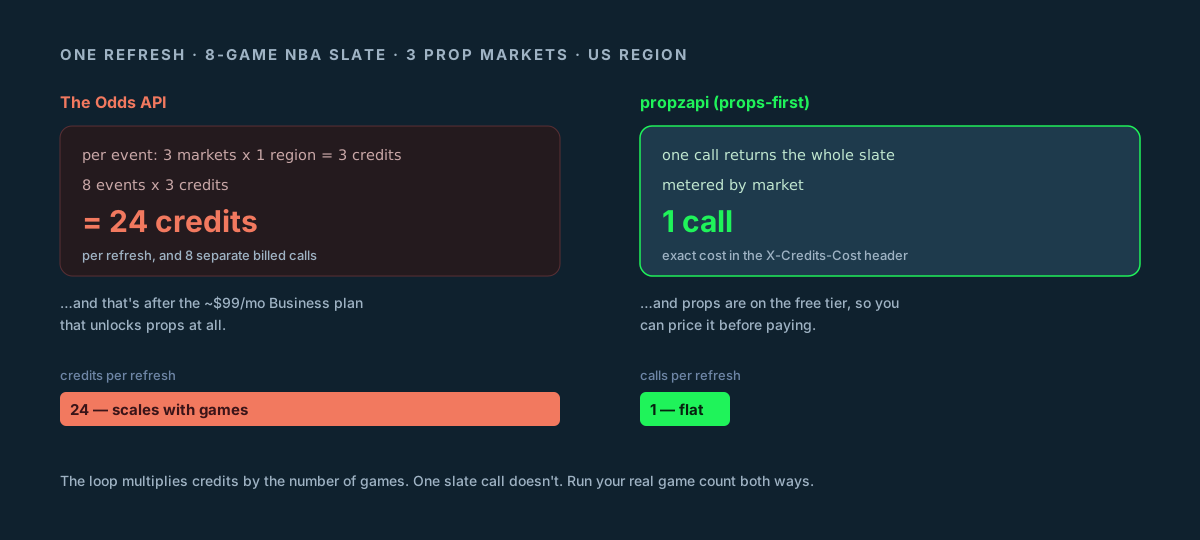
Walk the NBA example through. The Odds API's props sit on the Business plan, around $99 a month, above the free and roughly $29 Professional tiers that don't include props at all, per 2026 pricing comparisons. Then, for an eight-game slate pulling three prop markets in the US region, you make eight per-event calls at three credits each, so twenty-four credits for one refresh of one market group, before you poll again.
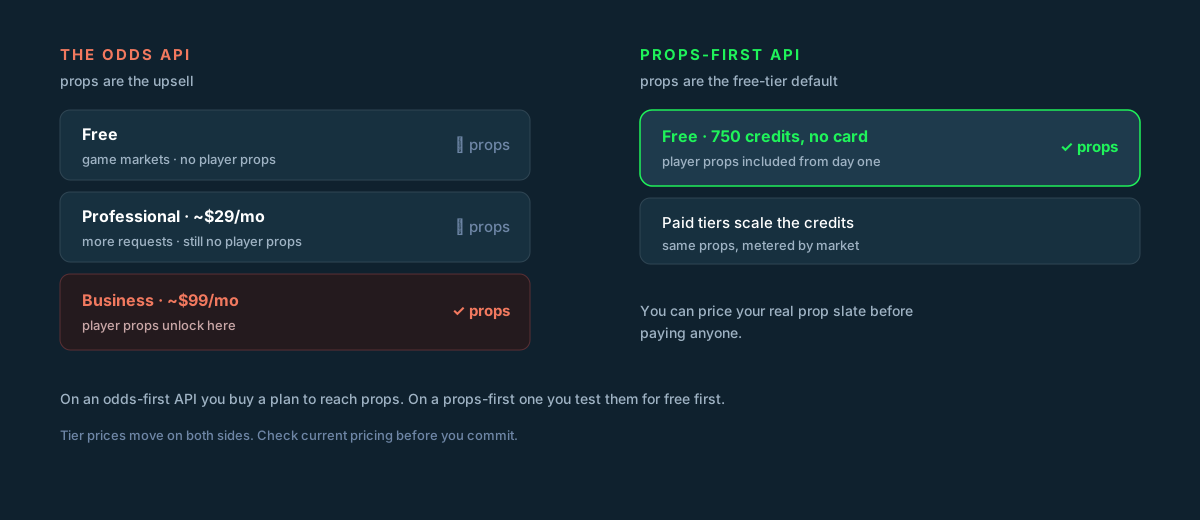
The metered model works differently. propzapi bills by market and returns the cost of each call in an X-Credits-Cost header, and player props are on the free tier, so you can price your real slate before paying anyone. Pricing changes on both sides, so run your actual game count and poll frequency through each before you commit.
How do depth and freshness compare?
Both refresh often enough for pre-match modeling; the real differences are books per prop and how much work fresh data costs you. On The Odds API each per-event call is a separate refresh you pay for and manage, so keeping a whole slate current means orchestrating the loop on an interval. A props-first feed refreshes the slate behind one call, so freshness is a polling frequency, not a fan-out.
For player props, the number of books pricing each prop is what you actually care about, because the disagreement between books is the signal. Test that directly: pull the same prop from each provider and count how many books priced it, for your league, not in general.
One practical note on live props. Neither of these is built to be a sub-second live-betting firehose the way an enterprise feed like OpticOdds is. If you need in-play props at very low latency, that's a different tier of product and budget. For pre-match and near-kickoff prop modeling, both are fine, and the access model decides the ergonomics.
Which should you actually pick?
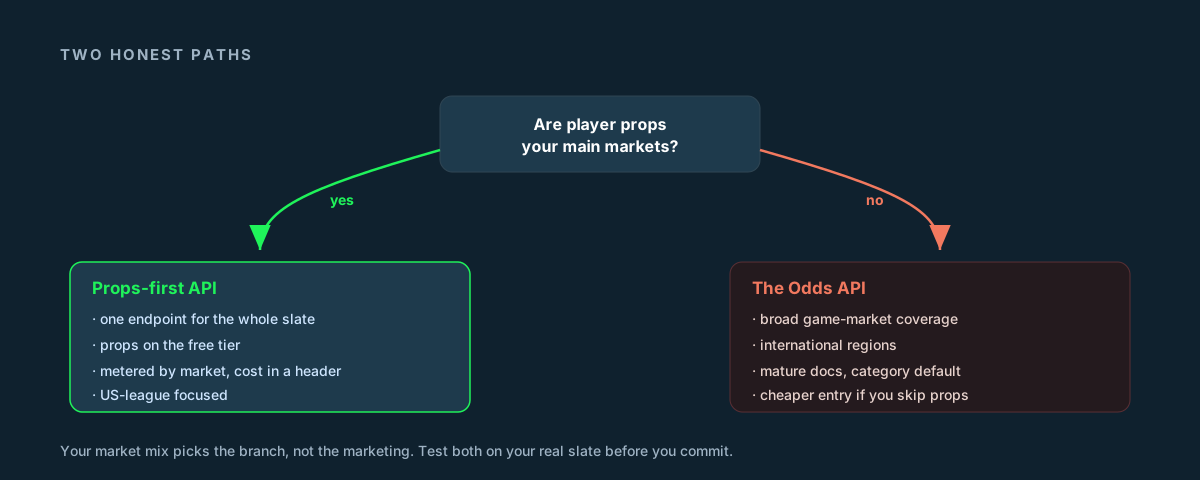
Pick on where props sit in your build. If player props are the point, a props-first API gives you a single endpoint, free-tier access, and metered cost, which is why people leave an odds-first feed for props. If props are a side dish next to game markets you already pull, especially international ones, staying on The Odds API is the reasonable call.
The clean decision. Props first and US-focused, go props-first. Game markets first, or international, or already deep in The Odds API's ecosystem, stay put. There's no universal winner here, only a right tool for which markets you actually model.
If you want the deeper props build, the NFL player props model guide walks the whole pipeline, and how to get player props data via API covers the fundamentals. The full side-by-side on price and coverage lives on the The Odds API alternative page, and the wider field is in the 2026 odds API comparison. Building for agents? There's an MCP server, and the docs list every prop market.
Frequently asked questions
- Does The Odds API have player props?
- Yes, but with two catches. Player props are gated to the Business plan and above, so they aren't on the free or Professional tiers, and they're pulled one event at a time through the /events/{eventId}/odds endpoint rather than a single props call. Coverage is US sports and US books. For prop-heavy builds that access model and paywall are the friction people run into.
- Is propzapi a good The Odds API alternative for props?
- For player props specifically, yes. propzapi is props-first, so props sit on their own /v1/props endpoint that you can filter by league and market, and they're available on the free tier. The Odds API is odds-first and treats props as a premium add-on. If props are the point of your build, a props-first feed fits better; if you mostly need game markets, The Odds API is a fine choice.
- How do you pull a full slate of player props from The Odds API?
- You list the events, then loop and call /events/{eventId}/odds once per game with your prop markets. There's no single call that returns every prop on the slate. Each of those per-event calls costs markets by regions credits, so a night of props is many billed calls. A props-first API returns the slate in one request instead.
- Which is cheaper for player props?
- It depends on volume, but props tip the math toward a props-first feed. The Odds API needs the Business plan just to unlock props, then bills markets by regions per event across a per-event loop. propzapi meters by market on a free-then-metered model and returns the exact cost of each call in a header. Run your real slate size through both before deciding.
- When should I stay on The Odds API?
- When props are a small part of what you do. The Odds API is the mature category default with clean docs, broad game-market coverage across many sports and regions, and a cheaper entry tier if you don't need props. This comparison is narrow on purpose: it's about player props, which is the one axis where an odds-first feed is weakest.
Test both on your real slate
Don't pick from a table, including this one. Get a free props-first key, pull one night of the exact market you model, and count the books and the credits. Then price the same slate on The Odds API's Business tier with the per-event loop. The honest answer falls out of your own game count and poll frequency, and it takes about twenty minutes to know for sure.